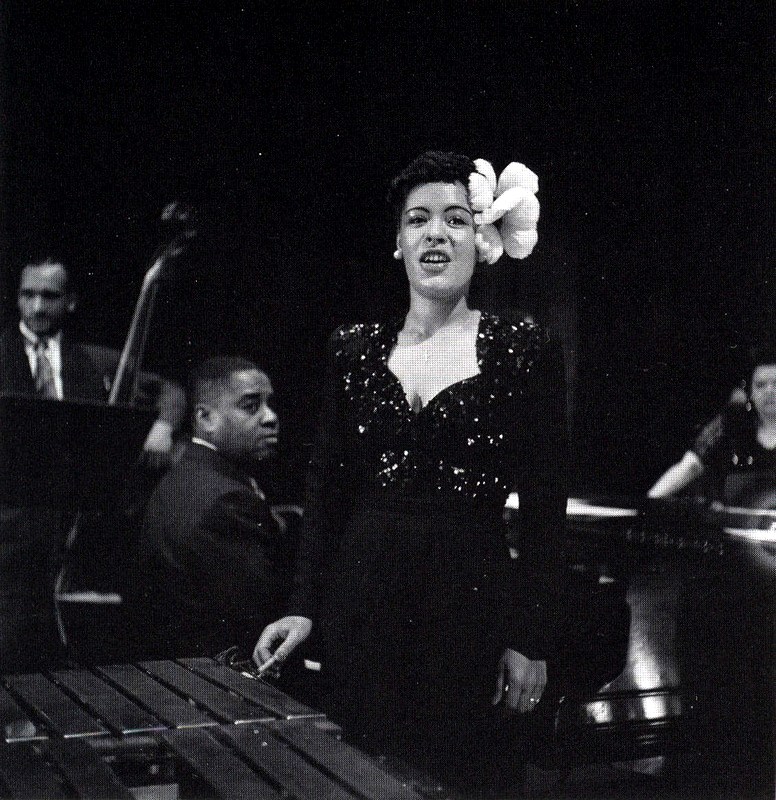
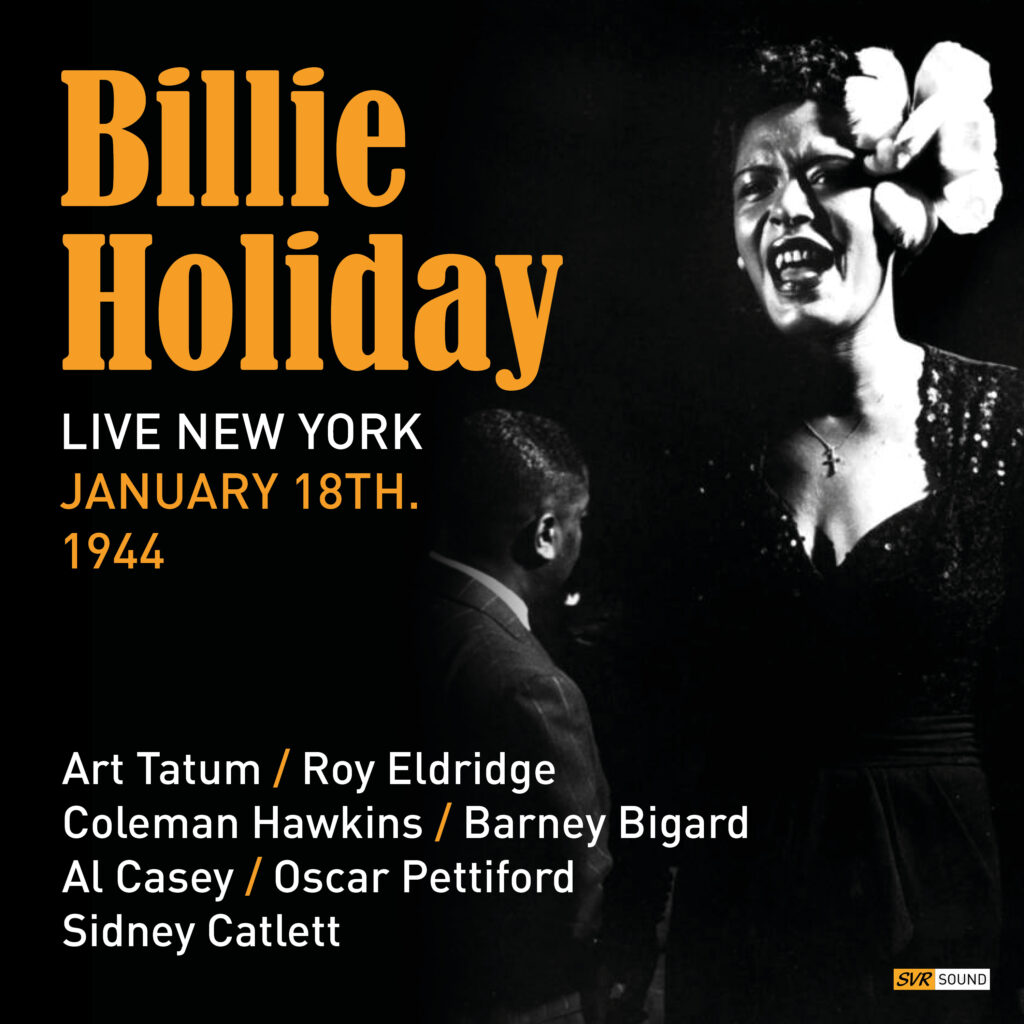
SVR SOUND announces the restoration of Billie Holiday's iconic performance at the Esquire magazine concert at the Metropolitan Opera House, recorded on January 18, 1944. Published by Lantower Records and available on all platforms.
This restoration not only "rescues" a musical document; it is a record of a milestone in the struggle for civil rights and American culture. That night, "Lady Day" made history by becoming the first Black woman to sing jazz on the prestigious stage of the Met.
A Jazz "All-Star" for the War Effort
Organized by Esquire magazine to raise funds through war bonds —reaching the record figure of $650,000 USD—, the concert brought together a constellation of legends that the restoration allows to be rediscovered with unprecedented clarity: Art Tatum (Piano) Oscar Pettiford (Double Bass).
Coleman Hawkins (Tenor Saxophone) Roy Eldridge (Trumpet).
Barney Bigard (Clarinet), Al Casey (Guitar) and Sidney Catlett (Drums).
What will the listener notice in this version?
Billie Holiday's "Presence": We've lifted the veil of saturation that used to surround her voice. Now, the warmth of her tone and her subtle inflections feel intimate, as if Lady Day were singing just a few feet away, allowing her emotion to reach you without interference.
Clarity and Instrumental Balance: You will be able to follow the individual trajectories of each soloist without them overshadowing each other.
You will be able to distinguish Coleman Hawkins' wide and powerful vibrato on the tenor sax.
You will feel the spark and clean brightness of Roy Eldridge's trumpet.
You will be able to follow the amazing agility of Art Tatum's hands at the piano, whose notes now sound defined and not like a distant murmur.
Personality in every note
Our restoration allows the unmistakable style of each musician—from the solid foundation of Oscar Pettiford's double bass to the elegant pulse of Sidney Catlett's drums—to emerge with its own weight and character. Ultimately, what we have sought is for you not only to hear a historic recording, but to be present at that night in 1944 and to recognize, with crystal clarity, the individual genius of those who made history at the Met.